
The Operation: Page 2 of 3
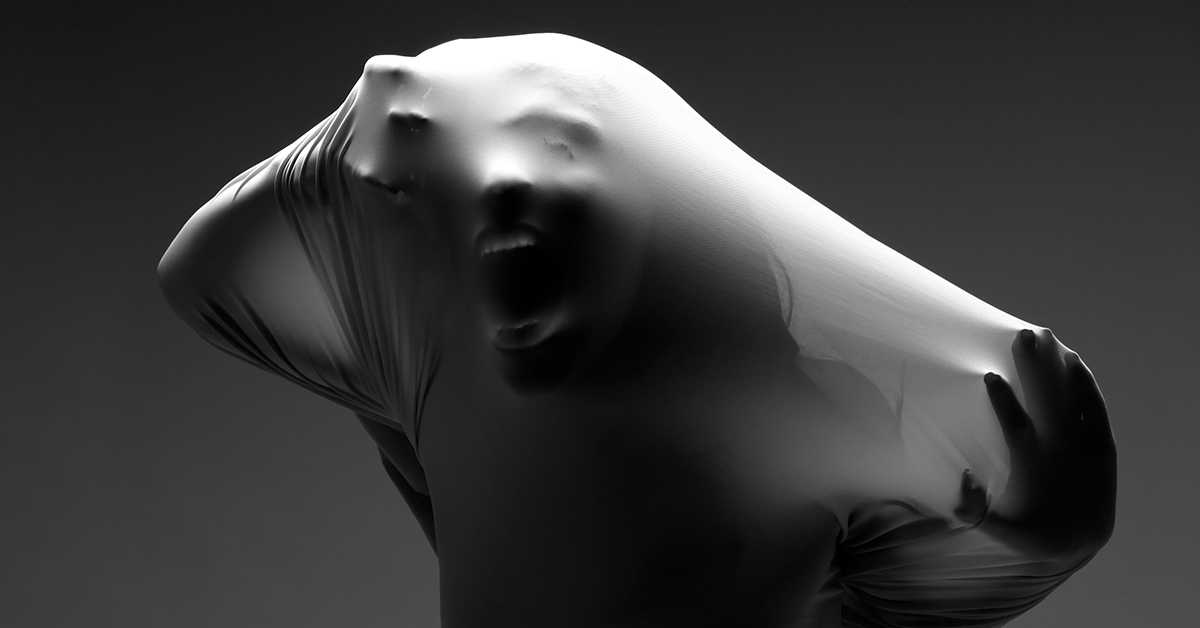
Racked with guilt for having a penis between my legs and an aggressive demeanor, I embodied a self-fulfilling prophecy: I dominated all the women who ever loved me with the acid one pours into a battery, I was dripping-electric-schism, half man half beast. I made it a habit to say the most disgusting things I could think of to my wife during our moments of intimacy, I invited my friends over to watch and laugh at violent movies that degraded women, and I saw all women as servants. Or at least I tried to. You see, I could never really forget or pretend like I didn't understand what my mother tried to teach me. I knew I was an oppressor that I had created and supported the worst images of women that existed and yet I could not stop it. And I saw no reason to stop it. Until that fatal day.
The election results revealed to us that the party was over. And when those steel-beady eyes winked into the camera that morning, as he prepared for what seemed to be an impromptu historical speech, I shuddered and fainted. They thought I was having a heart attack. Marie said it looked more like an epileptic fit.
I was behind that camera when the President winked. I was close up on him, like I'd been trained, with a long lens and a huge battery and I pulled focus as I never had before. I figured I might as well, I normally slept through these things, and I was quite irate since I had been transferred from one TV program to another (I formerly shot all the music videos) and I just didn't see what all the fuss what about. But we got a memo saying how changes had to be made and how events needed to be covered with the speed and rate of our changing times, so we needed our youngest, hippest, media dynamos in the trenches. What they meant is that they wanted us to make the new change that would affect us all—look sexy.
How I was supposed to glorify and zoom in on a pallid-stone-face the way I had on tight tits beneath the bed, teenage thighs, and gluteus maximus'—I don't know. But I did notice the more I filmed these women dancing and took advantage of their trust and laughed and patted them on the back when they themselves suggested the trashiest poses and, like troopers, did the job—the more I began to hate them. I wanted to brutalize them. The same way I had brutalized my own soul. It was a car ride home, with Langley Corvina's wife, that I had first felt the impact of my own hatred. My own disease.
*
It was raining. It was shortly after 1AM and it was about three months before the election. Langley's wife, Kiona, had worked late and noticed we were just wrapping when she stepped out of her office. I remember she looked surprised to see me, which I always found strange. She was the accountant, she cut the checks, she knew where I was, what I was doing, and I worked many times with Langley late into the night when he was making his animated shorts and commercials. So Kiona and I smiled of course and nodded, and I wrapped up my gear and was tempted to go out with everybody, but I knew Marie was at home waiting for me and I hoped something good would happen when I walked in the door so I figured I'd go home. But I confess my decision to go home was instigated by Kiona's offer to drop me off since she was taking a company car home. Of course I could not resist. Kiona's soft face, her precious ears, her heavy mouth, her Nubian poise, those elegant hands. Kiona made you feel like there was nothing you could do to affect her, yet she acknowledged you. She always seemed smarter and older and more experienced than we were. Even Langley seemed awkward around her.
In the town car, on the way home, it all became very clear to me. As we pulled up seventh and journeyed to the west side highway, I noticed Kiona looking out the car window, chin in her hand, shaking her head in disgust, and as I adjusted my sitting position - she, as if acting out of reflex, tugged at her skirt to make sure it was down, pinned down, and was nowhere near me. And she clenched her hands. And I understood. And I was ashamed. I noticed in the wet velvet blinking night, that on top of her bag was a book. A hardcover book about the civil rights movement. There were women gathering around another, a very proud looking Indian woman on the cover. I thought of my mother. And I could see her in Kiona.
"How is your sister?" Kiona asked. Gabrielle and I had not seen or spoken to each other since Mom's funeral. We're twins. And we always hated each other. No. I mean I always hated Gabrielle. She always talked about the past. I couldn't stand people who always talked about the past. Gabrielle lives in Arizona with a man I have never met. He limps and can no longer move the left side of his body. Something happened to him somewhere, sometime, in someplace I guess. Probably in some war. Gabrielle and this man both took care of Marie after the accident, the fire burned her pretty badly. I honestly didn't know that a cigarette could light a fire on someone's face. I threw an ashtray at her and I thought they were smoked out butts, but one was still lit. Astonishingly, after I had beaten her to a pulp, my hands, doused with all the beer and whiskey and poison I had been drinking, left residue on her face and the cigarette caught it and...Everything changed in that moment. It was a real tragedy. I looked up the definition of tragedy when I was locked up.
The town car dropped me off in front of my apartment building. I got out; the rain was coming down harder. Kiona was radiant in that yellow-car light, casting a warm patch of life, her tiny curls looking like corn. I kept thinking of sunflower oil. Sunflower oil in that nasty cold rain. I often think about that moment since that was the last time I saw her. And I never spoke to Langley, either. She must have said something to him that night. At the time I was very upset about it but I didn't tell anyone, it didn't matter anyway, it was all forgotten by the morning. But now, nearly four years later, I think about Kiona and what she said to me that night when I got out of the car. She stretched her neck out, slightly, and said, in a voice that still sends shivers up my spine:
"Do you like what you do?"
I never answered and she didn't wait while I pretended to think about it.
*
I found that book she was reading, I bought a copy. By the time I was released I had memorized it completely. I read that book every day after I say prayers to my mother. And I'm going to see Kiona. I'm going to see her after I get my operation. And I will answer her question and I will make them all proud.
*
Join Us!
Mercy, ingenuity, nuance, complex truths, guts and honor still matter! Join us in proclaiming so by purchasing, or giving the gift of, The New Engagement in print.
Follow Us
"You think your pain and your heartbreak are unprecedented in the history of the world, but then you read. It was books that taught me that the things that tormented me most were the very things that connected me with all the people who were alive, or who had ever been alive."
~ James Baldwin
Help us spread the ethos of compassion and understanding by joining our social media networks and sharing generously!
Contests & Prizes
Flash Fiction Contest
On May 1st, we announced the winners of our Flash Fiction Contest: Thomas Garcia (1st), Rick Krizman (2nd), and Rios de la Luz (3rd). Read more.
The James Baldwin Literature Prize
It is with great pleasure that we announce the winner of The James Baldwin Literature Prize of $1,000 to Hafsa Musa. Read more.
Recent Literature

"As an Act of Protest" Exposes the Frauds, Hypocrites, and Cowards

Wonderland, A Collection

The Arrested Evolution of William S. Burroughs

Dr. Strangetimes or: How We Learned to Stop Worrying and Love the Virus

The Writer

Futures in Gold

The Wanting Was a Wilderness

There’s Something About (Intergenerational) Trauma

La Dona Remedia

Hanging in The Balance

The End of Imagination

Grass Waving Under Wind, A Collection
The New Engagement
The New Engagement endeavors a novel approach to discovering, introducing, and showcasing writers, artists, and filmmakers, by providing them digital and print platforms, while encouraging and supporting their social-consciousness.